



How is brine for Lighvan cheese prepared at home?
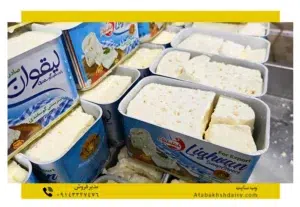
The only preservative used in producing most types of Lighvan cheese—especially authentic Lighvan cheese—is brine (saltwater). Brine plays a major role in the quality and shelf life of cheese. Besides its importance in preserving bulk cheese purchased for home use, learning how to prepare brine at home is certainly useful and interesting.
🔹 At Atabakhsh Lighvan Cheese Factory, brine is prepared using equipment and salinity meters. If you consume a lot of cheese, you can also use home salinity meters (available in laboratory equipment stores) to prepare brine more accurately and with peace of mind.
Buy Authentic Lighvan Cheese with Export Quality
🟢 Now the question is: How do we make brine using a salinity meter?
🔹 The brine concentration for soft cheeses is about 8–9 degrees above zero, while for hard and dry cheeses it is about 6–7 degrees above zero.
Note: In the initial production stage, when the cheese is still fresh and soft, the brine concentration in the factory is usually 11–12 degrees above zero.
How to make brine without a salinity meter
🔹 Prepare about 900 ml of cool drinking water. Add 100 g of clean, edible salt (the type usually used for soaking rice at home). Do not use industrial salt, iodized salt, or refined salt crystals because iodine alone can make your cheese bitter and spoil it in a very short time.
This method produces what we call “10% brine”.
Note: The quality of the cheese and its storage temperature can affect the required brine concentration:
- The softer and fresher the cheese, and the cooler the storage temperature (1–3°C), the higher the brine concentration should be, until the cheese becomes firm in texture but still pleasantly salty.
The harder and saltier the cheese, and the warmer the storage temperature (above 4°C), the lower the brine concentration should be, just enough to keep the cheese in shape without becoming mushy.
When should brine be replaced?
- If the brine develops an unpleasant odor
- If the cheese softens and loses its shape
- If the cheese becomes too hard and salty (in this case, just add some cool drinking water to dilute the brine)
Tip: Always keep a portion of the old brine (if it hasn’t spoiled) and add it to the new brine you prepare.
This helps preserve the authentic taste of the cheese.
Note: If the brine becomes jelly-like but has no bad smell and no mold, it’s not spoiled—this can be due to its high protein content.
How to reduce the saltiness of cheese before eating
For those who prefer low-salt cheese—whether due to health reasons, personal taste, or dietary habits—place the cheese in cool water for about 20 minutes before eating to reduce its saltiness.
Summary of Methods for Making Brine for Lighvan Cheese at Home
We’d be happy if you share your comments after reading this article to help us improve the quality of our content. Please don’t forget to rate this article.